When someone buys a house to spend half the year or retire in Mallorca, there is a question that decides more than the views and that almost nobody asks: what happens if I get ill? The answer for Alcúdia is reassuring, but it is worth knowing in detail: what is nearby, what is an hour away, how you access public healthcare depending on where you come from, and how to choose private cover well.
What is ten minutes away
- Alcúdia Health Centre: public primary care, with GP, paediatrics, nursing and an out-of-hours Punt d'Atenció Continuada for urgent care. It is your first port of call if you are registered as a resident.
- Hospital Juaneda Muro: a private hospital in Playa de Muro, about ten minutes from Alcanada. A&E, specialist consultations, diagnostic imaging and inpatient care. For many residents of the north it is the everyday private reference.
- Private practices: in Alcúdia, Port d'Alcúdia and Pollença there are private GPs, dentists, physiotherapists and specialists, a good number of them consulting in English and German.
- Pharmacies: several in Alcúdia and the Port, with a rota for out-of-hours duty. The duty pharmacy is posted on every pharmacy door.
What is thirty to forty minutes away
- Hospital Comarcal d'Inca: the public reference hospital for the north of the island, about thirty minutes by road. 24-hour A&E, operating theatres, maternity and the usual specialties of a district hospital.
- Hospital de Manacor: public, about forty minutes away, covering the east and serving as an alternative.
And an hour away: Palma
- Son Espases: the Balearics' tertiary public reference hospital, where complex conditions from the whole island are treated. About fifty-five minutes by motorway.
- Palma's private clinics: Clínica Juaneda, Quirónsalud Palmaplanas and Clínica Rotger, among others, concentrate high-end private specialisation. For a scheduled procedure the journey is manageable; for an emergency, the nearby hospitals are there.
- Emergencies: 112 is the single number. Doctor-staffed ambulances cover the north from bases in Alcúdia and Inca, and the air ambulance operates across the island.
How to access public healthcare
It depends on your situation, not your nationality:
- EU visitor: with the European Health Insurance Card you are covered for necessary care during temporary stays, on the same terms as a resident. It does not cover repatriation or planned treatment.
- EU resident working or paying contributions here: registration with Social Security and an IB-Salut health card, with a GP assigned at the Alcúdia health centre.
- EU pensioner: with the S1 form issued by your country, you register with IB-Salut and have full cover; the cost is borne by your home system. It is the route of most German and British retirees in the north.
- Resident with no contributions or pension (non-lucrative visa, for example): the route is private insurance, which the visa itself requires without co-payments. There is also a special agreement with the public system, with a fixed monthly fee by age, for anyone registered as a resident for at least a year. It covers care but not prescriptions.
- Non-EU visitor: travel insurance with medical cover. Without it, non-urgent care is invoiced.
The requirement common to almost everything is registration as a resident (empadronamiento) in Alcúdia. It is the first formality after the purchase, and the one that unlocks the rest. We explain it in buying a house in Mallorca as a foreigner.
Private insurance: what the premium depends on and what to check
- Premium: it depends above all on age, and also on the cover you choose, on whether the policy has co-payments or reimburses expenses, and on the insurer. It rises with the years, more noticeably from sixty-five onwards, and some companies do not accept new policyholders above a certain age. The mainstream insurers (Sanitas, Adeslas, DKV, Mapfre, Asisa, Axa) all operate on the island: ask for several quotes with equivalent cover and compare them before deciding.
- Waiting periods: three to ten months for hospitalisation, surgery or childbirth. If you arrive with a pre-existing condition, read them before signing.
- Provider network: check that it includes the private hospital nearest your home and the Palma clinics. A policy whose network is only in the capital means an hour's drive for every appointment.
- Co-payments: policies with co-payments are cheaper; visas require none. If the insurance is an administrative requirement, check this.
- International cover: if you split the year between two countries, some policies cover both. They usually cost more but avoid having two.
What a resident learns in the first year
- The electronic prescription lets you collect medication at any pharmacy with your health card; chronic treatments are renewed without an appointment.
- Many doctors in the north speak German and English; in the public system, if you need it, there is an interpreting service.
- Alcúdia has an active, healthy life within reach, and that is healthcare too: we cover it in routes, cycling and wellness in Alcúdia.
- In high season, the Port's urgent-care unit fills with tourists; the health centre in Alcúdia town is usually quicker.
Conclusion
Living in Alcúdia does not mean living far from medicine: there is urgent care and a private hospital ten minutes away, a public hospital thirty minutes away and Palma's high specialisation an hour away, by motorway and with an air ambulance for what cannot wait. What does need deciding in advance is your route of access —registration, S1, private insurance— because that is what makes the first scare just a scare.
Interested in Alcudia Luz?
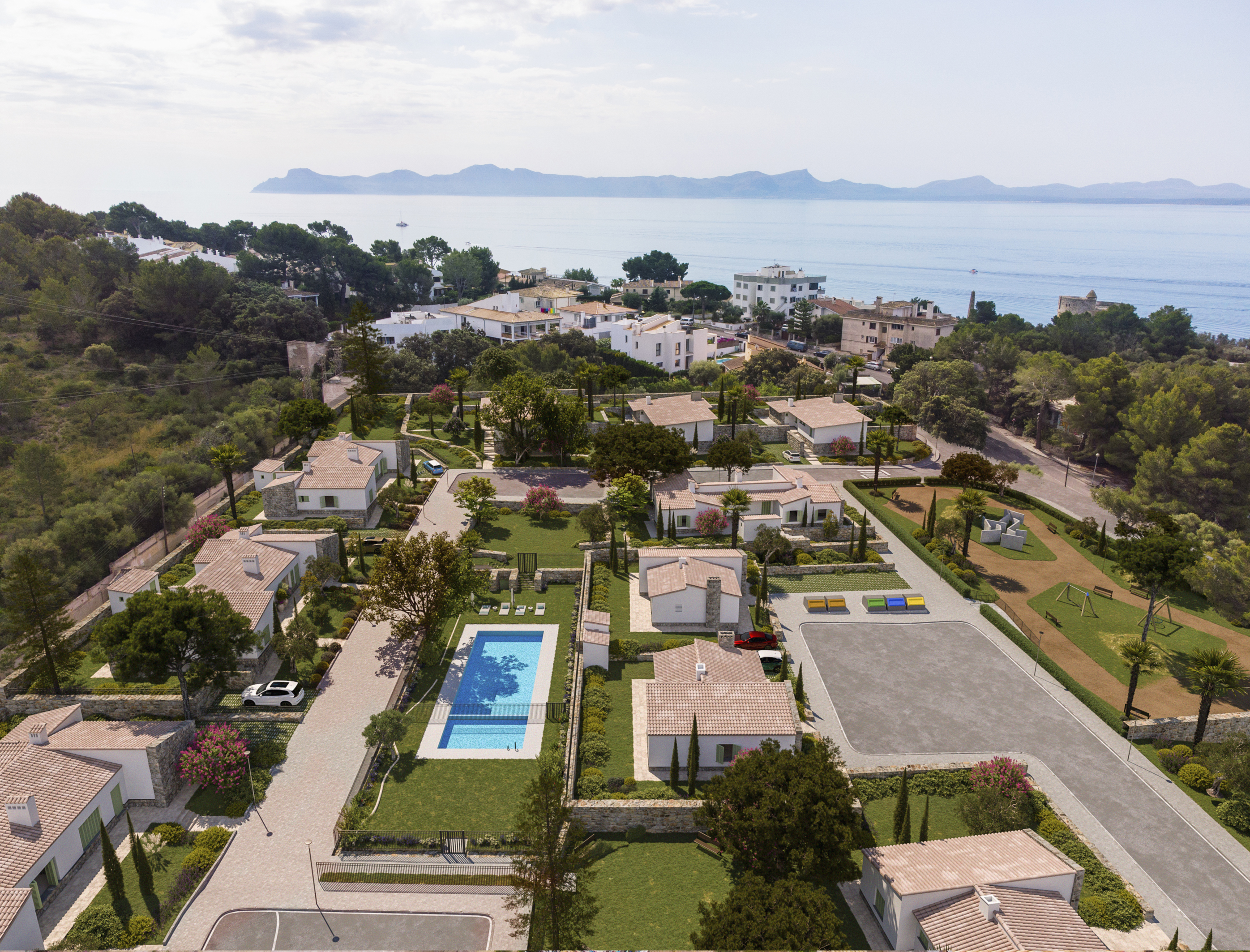
Many Alcudia Luz owners are European retirees who sorted out their healthcare cover before moving. We can tell you how.